
How AI Analytics Are Changing Professional Esports Coaching (2026 Guide)
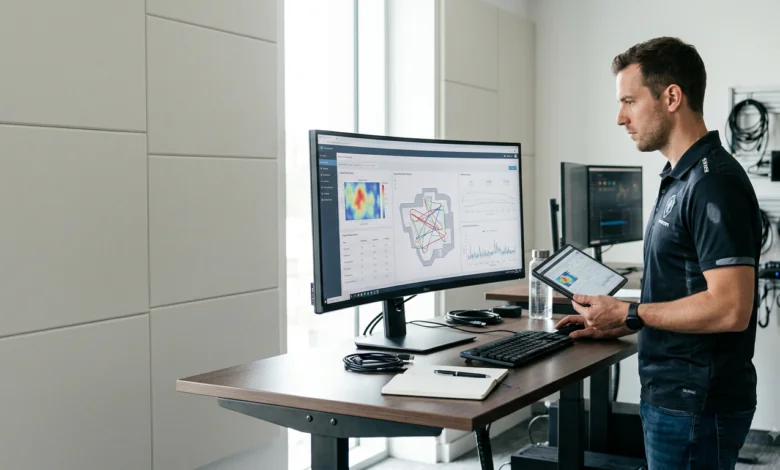
Professional esports coaching has reached an unprecedented turning point. In the early days of competitive gaming, coaching relied almost entirely on intuition, manual review of match vods (video-on-demand), and personal notes written on whiteboards or spreadsheets. A head coach would spend dozens of hours scrubbing through game recordings frame-by-frame, tracking round economy, noting individual positional mistakes, and trying to decipher opponent tendencies.
Today, competitive titles like League of Legends, VALORANT, Counter-Strike 2 (CS2), and Dota 2 produce millions of server-level data points per match. A single 40-minute League of Legends game generates vast streams of telemetry—including pixel-by-pixel coordinates of every hero movement, microsecond ability cooldown triggers, gold generation curves, and precise vision ward placements. For human analysts working alone, processing this volume of raw data within tight tournament schedules is a physical impossibility.
Enter artificial intelligence and advanced machine learning models. By processing server data, parsed replay files, and video streams at massive scale, AI analytics tools give coaching staffs immediate access to patterns, anomalies, and tactical trends that were previously invisible. Rather than replacing human coaches, modern AI infrastructure functions as a force multiplier—automating repetitive statistical gathering so coaches can focus on leadership, mental conditioning, communication, and high-level strategic adaptation.
How AI Analytics Are Changing Professional Esports Coaching
The integration of AI analytics in esports represents a fundamental shift in how competitive organizations prepare for top-tier competitions. Historically, esports analysis was reactive; teams looked at past match results and broad end-of-game statistics like K/D (Kill/Death ratio) or damage per minute. However, high-level coaching requires understanding why specific plays succeeded or failed.
TRADITIONAL COACHING MODEL vs. AI-ASSISTED COACHING MODEL

Traditional Workflow:
[Raw VOD Footage] ──> [Manual Frame Scrubbing] ──> [Hand-Drawn Notes] ──> [Broad Feedback]

AI-Assisted Workflow:
[Server Telemetry] ──> [Machine Learning Parsing] ──> [Pattern & Anomaly Tagging] ──> [Contextual Coaching]
Modern AI analytics systems ingest raw match data directly through server APIs or computer vision pipelines, instantly turning unstructured gameplay into structured, actionable intelligence. This allows coaching staffs to transition from subjective speculation to empirical, evidence-driven strategy.
Crucially, AI adoption in esports coaching falls into three distinct categories:
-
Confirmed Use: Documented, operational deployment of AI data systems by tier-1 organizations, tournament organizers, or official league data portals (e.g., Riot Games’ GRID Data Portal, Team Liquid’s enterprise analytics infrastructure).
-
Experimental Use: Systems tested in academic labs or private beta environments, such as computer-vision-based emotion tracking or automated draft engines.
-
Potential Use: Conceptual applications—such as generative AI real-time tactical adjustments—that are currently limited by technology or restricted by official tournament rulebooks.
How AI Helps With Match Analysis
In competitive gaming circuits like the VALORANT Champions Tour (VCT), ESL Pro League, or the League of Legends Championship Series, teams often play multiple series per week. Time between matches is extremely limited, making rapid post-match review vital.
+-----------------------------------------------------------------------------------+
|                        AI MATCH REVIEW AUTOMATION PIPELINE                         |
+-----------------------------------------------------------------------------------+
| 1. RAW DATA INGESTION: Parse server demo files / official API event logs         |
| 2. EVENT IDENTIFICATION: Detect round wins, economy flips, and team fights       |
| 3. PATTERN RECOGNITION: Tag repeated positioning errors and utility misfires     |
| 4. CLIP GENERATION: Automatically assemble 15-second contextual video clips     |
| 5. DASHBOARD DELIVERY: Deliver organized timestamps directly to coach tablet    |
+-----------------------------------------------------------------------------------+
Automated Match Review and Timestamping
Traditionally, an analyst spent three to four hours marking key timestamps in a single 45-minute VOD. AI match analysis tools automate this process entirely. By parsing server demo files or game logs, machine learning models instantly index every significant event:
-
Economy Flips: Identifying exact rounds where spending decisions created unexpected gear disadvantages.
-
First-Kill / First-Death Events: Isolating entry engagements to see who opened the round and under what spatial conditions.
-
Utility Misuse: Tracking wasted abilities, such as flashes that blinded teammates or smokes that landed off-target.
Pattern Detection and Mistake Identification
AI algorithms excel at finding recurring micro-mistakes across dozens of games. For instance, in CS2, an AI tool can analyze 50 matches played by a team and detect that their A-site anchor dies to an entry flash 68% of the time when holding from a specific corner. Instead of watching all 50 matches, the coach receives an automated alert highlighting this specific vulnerability, complete with video clips linked directly to the spatial coordinates.
AI-Powered Opponent Scouting
Scouting opponent strategies has traditionally been one of the most labor-intensive tasks for esports analysts. Prior to a playoff series, coaches spent days watching an opponent’s recent matches to decode their playstyle. AI analytics has streamlined this workflow by transforming opponent scouting into algorithmic pattern recognition.
+-----------------------------------------------------------------------------------+
|                         OPPONENT SCOUTING DATA METRICS                            |
+-----------------------------------------------------------------------------------+
| Metric Category      | Telemetry Analyzed by AI Systems                           |
+----------------------+------------------------------------------------------------+
| Map Control          | Heatmaps of team presence at 30s, 60s, and 90s marks       |
| Rotation Timing      | Average seconds taken to rotate between sites post-plant  |
| Utility Fingerprints | Exact coordinates where smokes, molotovs, or flashes land  |
| Economic Habits      | Tendencies to force-buy or save during specific scorelines |
| Individual Habits    | Tendencies to peek specific angles on eco vs. full-buy     |
+----------------------+------------------------------------------------------------+
Uncovering Tactical Fingerprints
Every professional team develops subtle tactical habits, known as “fingerprints.” AI systems analyze hundreds of opponent matches to construct probabilistic models of these behaviors:
-
Opening Setups: In VALORANT, an AI scouting tool can map where an opposing team deploys reconnaissance utility in the first 10 seconds of a round across all maps.
-
Rotational Triggers: In Dota 2 or League of Legends, machine learning algorithms can calculate an opposing mid-laner’s exact movement probability after pushing a wave, predicting whether they will roam top, roam bottom, or take a neutral jungle camp based on minion health and vision ward placements.
Exploiting Opponent Weaknesses
By comparing an opponent’s statistical tendencies against their own roster’s strengths, coaches can formulate targeted game plans. If data reveals that an opposing Counter-Strike team has a low win rate when defending B-site against fast-paced executes within the first 20 seconds, the coach can structure specific round calls to exploit that exact vulnerability early in a series.
Personalized Player Training
Generic, high-volume practice (often referred to as “grinding” ranked ladders) is increasingly recognized as inefficient for top-tier professionals. AI-powered esports analytics enables highly personalized, targeted training regimes that focus on an individual player’s specific mechanical or decision-making gaps.
+-----------------------------------------------------------------------------------+
|                       TRADITIONAL VS. AI-DRIVEN TRAINING                          |
+-----------------------------------+-----------------------------------------------+
| Feature                           | Traditional Training                          |
+-----------------------------------+-----------------------------------------------+
| Primary Method                    | 8–10 hours of unguided ranked scrims          |
| Feedback Loop                     | Subjective coach notes after practice block   |
| Skill Focus                       | General mechanics and team play               |
+-----------------------------------+-----------------------------------------------+
| Feature                           | AI-Assisted Personalized Training             |
+-----------------------------------+-----------------------------------------------+
| Primary Method                    | Targeted micro-drills + focused scrim blocks  |
| Feedback Loop                     | Real-time objective metric tracking           |
| Skill Focus                       | Isolated mechanical gaps (e.g., crosshair placement) |
+-----------------------------------+-----------------------------------------------+
Micro-Mechanical Analysis
Modern training software utilizes computer vision and high-frequency input logging to measure micro-level mechanical performance:
-
Crosshair Placement: Tracking how many pixels a player must adjust their aiming reticle when an enemy appears around a corner.
-
Reaction Time vs. Decision Time: Differentiating between pure physical reaction speed and the latency caused by hesitation during complex tactical situations.
-
Ability/Item Efficiency: Measuring how quickly a player executes ability combos compared to theoretical maximum execution speeds.
Targeted Drill Generation
When an AI system detects that a tactical shooter player is struggling with micro-adjustments against moving targets at long range, the coaching staff can assign specific, AI-generated custom practice scenarios. Instead of playing five hours of general scrims hoping that scenario occurs, the player spends 30 minutes repeatedly practicing that exact engagement geometry until muscle memory improves.
Draft and Strategy Support
In titles with pick-and-ban phases—such as League of Legends, Dota 2, and VALORANT—the draft phase often dictates a substantial portion of a match’s win probability. Drafting is a complex game-theoretic challenge involving hero synergies, counter-picks, player comfort, map layout, and evolving meta trends.
                      AI-ASSISTED DRAFT RECOMMENDATION ENGINE

  [Input: Banned Champions] ──┐
  [Input: Selected Champions] ├──> [Monte Carlo Tree Search / Neural Net] ──> [Win Probability %]
  [Input: Player Win Rates]  ──┘                                           └──> [Recommended Bans/Picks]
Algorithmic Win-Probability Modeling
Advanced draft analysis engines utilize neural networks trained on millions of competitive and high-elo matches. During a draft, these models evaluate the current state of selected and banned characters, instantly outputting:
-
Compositional Balance: Evaluating team synergy across wave-clear, crowd control, damage distribution (magic vs. physical), and power-spike timings.
-
Win-Probability Shifts: Calculating how a potential pick alters the team’s statistical chance of winning based on historical head-to-head composition performance.
-
Counter-Pick Identification: Suggesting niche hero picks that counter the opponent’s core strategy while maintaining synergy with existing selections.
The Role of Human Judgment in Drafting
While AI draft models provide instant statistical clarity, experienced coaches maintain final decision-making control. A draft engine might suggest a hero with a mathematically high win rate, but a human coach understands if a player is experiencing an off-day, lacks confidence on that champion, or if the team has prepared a secret non-standard strategy that defies historical data.
Real-Time Decision Support
A critical distinction in professional esports analytics exists between pre-match/post-match analytics and in-match real-time assistance.
+-----------------------------------------------------------------------------------+
|                        PRE-MATCH VS. IN-MATCH AI UTILITY                          |
+-----------------------------------+-----------------------------------------------+
| Category                          | Characteristics & Rules                       |
+-----------------------------------+-----------------------------------------------+
| Pre-Match & Post-Match AI         | • Unrestricted practice and prep usage        |
|                                   | • Analyzes historical VODs and server logs    |
|                                   | • Generates scouting reports and dashboards   |
+-----------------------------------+-----------------------------------------------+
| In-Match Real-Time AI             | • Strictly regulated or banned by TOs        |
|                                   | • Cannot feed live algorithmic calls to teams |
|                                   | • Used primarily for broadcast stream insights |
+-----------------------------------+-----------------------------------------------+
Practice Scrim Integration
During offline practice matches (scrims), coaches can use real-time data overlays to monitor live game metrics. An AI dashboard running on a coach’s second monitor might highlight:
-
Live team economy tracking and projected opponent gold reserves.
-
Objective control percentages based on current map positioning.
-
Real-time warnings when a team’s rotational pacing falls behind their established baseline.
Regulatory Constraints in Tournament Play
During official tournament matches, major tournament organizers (TOs) such as Riot Games, ESL FACEIT Group, and BLAST enforce strict rules regarding external software. In most tier-1 competitions:
-
Real-time automated AI decision engines feeding live advice to players or coaches during active rounds are strictly prohibited.
-
Coaches are typically restricted to voice communication during designated tactical timeouts or pre-game draft phases.
-
Therefore, real-time AI analytics primarily serve as educational tools during scrimmage sessions, preparing players to recognize tactical states instinctively without needing live algorithmic prompting during tournament play.
Player Performance and Fatigue Monitoring
Professional esports athletes face intense mental demands, with practice schedules often exceeding 8 to 12 hours a day. Managing training load, preventing burnout, and maintaining peak cognitive performance are primary responsibilities for modern coaching and support staffs.
+-----------------------------------------------------------------------------------+
|                      COGNITIVE & PERFORMANCE INDICATORS                           |
+-----------------------------------+-----------------------------------------------+
| Performance Metric                | Signal Analyzed by Health/Analytics Staff     |
+-----------------------------------+-----------------------------------------------+
| Click Inconsistency               | Micro-stutters or variance in APM over time   |
| Reaction Latency Slumps           | Increasing latency during 4+ hour scrims      |
| Communication Degradation         | Drop in verbal callout frequency during late  |
| Precision Decay                   | Decreased crosshair stability on late rounds  |
+-----------------------------------+-----------------------------------------------+
Cognitive Fatigue Tracking
To track mental fatigue without invasive medical hardware, performance analysts combine in-game telemetry with permitted physical metrics:
-
APM (Actions Per Minute) Decay: Tracking whether a player’s inputs drop dramatically in speed or accuracy during the third or fourth hour of a practice block.
-
Reaction Latency Variance: Measuring microsecond increases in target acquisition time over long sessions, serving as an objective signal that cognitive fatigue is setting in.
-
Communication Audits: Analyzing team audio logs to detect decreases in callout frequency, rising stress tones, or degraded communication structure during high-pressure late-game scenarios.
Optimizing Training Hours
Instead of forcing players into unproductive 12-hour sessions, data-driven coaching staffs use fatigue metrics to structure shorter, higher-intensity practice blocks. When performance indicators show that a player’s learning rate plateaus due to exhaustion, coaches pivot to recovery, vod review, or physical exercise—improving long-term performance retention while reducing burnout risks.
AI vs Human Coaches
As AI tools become more sophisticated, a common question arises: Can AI replace professional esports coaches?
A side-by-side evaluation reveals that machine intelligence and human leadership address completely different aspects of competitive performance:
+-----------------------------------------------------------------------------------+
|                           AI ANALYTICS VS. HUMAN COACH                            |
+-----------------------------------+-----------------------------------------------+
| AI Systems Excel At               | Human Coaches Excel At                        |
+-----------------------------------+-----------------------------------------------+
| • Processing millions of events   | • Building team culture and trust             |
| • Objective pattern identification| • Resolving interpersonal conflicts           |
| • Rapid historical scouting       | • Motivating players under high pressure      |
| • Detecting micro-mechanical trends| • Providing real-time emotional framing       |
| • Unbiased statistical tracking   | • Adapting to unquantifiable human factors    |
+-----------------------------------+-----------------------------------------------+
What AI Cannot Replicate
While an AI model can calculate that a team has a 12% chance of winning a specific scenario, it cannot:
-
Deliver Emotional Grounding: An AI cannot look a struggling 19-year-old player in the eye after a devastating round loss and provide the confidence needed to reset mentally.
-
Understand Human Context: An AI does not know if a player’s poor performance stems from personal stress, team friction, or physical illness unless explicitly coded, and even then, it lacks empathy.
-
Manage Ego and Chemistry: Professional rosters consist of competitive personalities. Balancing egos, mediating disagreements, and building mutual trust require high emotional intelligence ($EQ$).
The Hybrid Model: AI-Assisted Human Coaching
The consensus among professional esports organizations is that AI will not replace human coaches. Instead, coaches who leverage AI analytics will replace coaches who do not. The ideal structure is a hybrid model where AI handles data processing and pattern detection, leaving the human coach free to interpret insights, design strategy, and lead the team humanely.
Real-World Esports Examples
To understand how data and analytics function in practice, consider verified implementations across major esports organizations, leagues, and technology providers:
+-----------------------------------------------------------------------------------+
|                        VERIFIED INDUSTRY DATA INTEGRATIONS                        |
+-------------------+--------------------+------------------------------------------+
| Organization/Tech | Game Title(s)      | Application & Technology Focus           |
+-------------------+--------------------+------------------------------------------+
| Team Liquid / SAP | LoL, Dota 2, MLBB  | Enterprise data analytics platform for   |
|                   |                    | scouting, match prep, and performance    |
|                   |                    | tracking.                  |
+-------------------+--------------------+------------------------------------------+
| GRID Esports /    | VALORANT, LoL,     | Official server-level data infrastructure|
| Riot Games        | CS2, Dota 2        | powering match intelligence, broadcast   |
|                   |                    | insights, and team analytics.|
+-------------------+--------------------+------------------------------------------+
| Fnatic / Google   | Multiple Titles    | Development of AI coaching agents for    |
| Cloud / Devoteam  |                    | personalized training and performance    |
|                   |                    | feedback.                 |
+-------------------+--------------------+------------------------------------------+
| Bayes Esports /   | CS2, Dota 2        | Server-level telemetry distribution and  |
| ESL FACEIT Group  |                    | predictive probability engines for live  |
|                   |                    | match conditions.    |
+-------------------+--------------------+------------------------------------------+
1. Team Liquid & SAP Enterprise Analytics
-
Organization: Team Liquid
-
Games: League of Legends, Dota 2, Mobile Legends: Bang Bang
-
Implementation: Team Liquid partnered with enterprise software leader SAP to build customized data analytics platforms. The system ingests match data to assist coaches in scouting opponents, evaluating player talent, and analyzing draft compositions.
-
Outcome: Coaching staffs save hours of manual data entry, enabling evidence-based pre-match preparation across multi-game rosters.
2. GRID Esports & Riot Games Official Data Portal
-
Organization: GRID Esports in partnership with Riot Games
-
Games: VALORANT, League of Legends
-
Implementation: GRID captures server-level data directly from tournament servers. This official data infrastructure feeds match intelligence reports, tracking detailed player damage efficiency, utility usage, and rotational pacing across global events like VCT Masters and VALORANT Champions.
-
Outcome: Professional teams access verified, granular telemetry for post-match review and opponent preparation.
3. Fnatic & Google Cloud AI Integration
-
Organization: Fnatic
-
Implementation: Partnering with tech consultancy Devoteam and Google Cloud, Fnatic initiated projects to build AI coaching systems designed to analyze player performance data and deliver personalized training feedback at scale.
Types of AI Used in Esports Analytics
To better understand the underlying technology, here is how core computer science disciplines are applied to competitive gaming:
+-----------------------------------------------------------------------------------+
|                           AI TECHNOLOGIES IN ESPORTS                              |
+-----------------------+-----------------------------------------------------------+
| AI Technology         | Primary Application in Coaching Workflow                  |
+-----------------------+-----------------------------------------------------------+
| Machine Learning (ML) | Identifying tactical patterns, clustering player styles,  |
|                       | and predicting win probabilities.                         |
+-----------------------+-----------------------------------------------------------+
| Computer Vision (CV)  | Parsing VOD video streams without game-log access;       |
|                       | tracking crosshair positioning and HUD elements.          |
+-----------------------+-----------------------------------------------------------+
| Natural Language      | Processing team voice communications to evaluate clarity,|
| Processing (NLP)      | callout frequency, and stress levels.                     |
+-----------------------+-----------------------------------------------------------+
| Predictive Analytics  | Simulating draft pick/ban scenarios and modeling economic |
|                       | risk-reward decisions.                                    |
+-----------------------+-----------------------------------------------------------+
Machine Learning (ML)
Supervised and unsupervised learning algorithms process high-dimensional gameplay data. Clustering algorithms (e.g., k-means) group players by playstyle traits, while classification models predict rotational paths based on early-round map control.
Computer Vision (CV)
When raw server logs or demo files are unavailable (such as during third-party tournament streams or console esports), computer vision algorithms process direct video output. Optical character recognition (OCR) and object tracking read health bars, mini-map coordinates, kill feeds, and inventory states directly from video frames.
Natural Language Processing (NLP)
Ethically implemented NLP models transcribe and analyze voice communications recorded during practice scrims. The software measures speech rate, identifies overlapping callouts, and highlights moments where communication broke down during chaotic team fights.
Benefits of AI Analytics
Integrating machine-learning-driven analytics into professional coaching workflows provides distinct operational advantages:
-
Drastic Time Savings: Reduces the time required to gather match statistics and create scouting reports from days to minutes.
-
Removal of Observer Bias: Replaces subjective “gut feelings” with objective data, ensuring coaches judge plays based on statistical reality rather than memory bias.
-
Uncovering Hidden Patterns: Detects subtle opponent habits and rotational setups that human eyes miss when watching video at normal speed.
-
Targeted Micro-Practice: Replaces endless, unfocused scrim hours with targeted drills that fix specific mechanical or situational flaws.
-
Enhanced Roster Scouting: Allows team executives and head coaches to evaluate potential recruit talent globally using objective performance benchmarks rather than regional reputation.
Limitations and Risks
Despite its significant advantages, over-relying on AI analytics in esports introduces noticeable risks and operational pitfalls that coaching staffs must navigate carefully.
+-----------------------------------------------------------------------------------+
|                             RISKS & LIMITATIONS AUDIT                             |
+-----------------------+-----------------------------------------------------------+
| Challenge             | Operational Risk to Team Performance                      |
+-----------------------+-----------------------------------------------------------+
| Data Quality / Noise  | Incorrect parsing leads to flawed tactical conclusions    |
| Context Blindness     | Numbers fail to explain psychological or sacrificial plays |
| Over-Optimization     | Predictable playstyles resulting from strict stat-chasing |
| Financial Disparity   | Wealthier organizations buying superior proprietary tech  |
+-----------------------+-----------------------------------------------------------+
The “Context Problem” in Gaming Statistics
Statistics in esports can be deeply misleading without situational context. For example:
-
A VALORANT entry fragger might have a low overall K/D ratio (0.85), but their aggressive spacing consistently allows their secondary fragger to convert easy trade kills and win rounds.
-
An AI model evaluating raw K/D might flag the entry fragger as a weak link, whereas a human coach recognizes that their sacrificial playstyle is the foundation of the team’s offensive success.
Over-Reliance on Data and Loss of Creativity
When teams optimize strictly for statistical efficiency, their playstyle can become predictable. If an AI scouting tool recommends taking the “statistically optimal” map route 100% of the time, top opponents will quickly anticipate and counter that movement. High-level esports requires controlled unpredictability, creative risk-taking, and intuitive playmakers who occasionally defy statistical norms.
Data Privacy and Security Concerns
Professional esports teams guard their scrimmage data (“scrim leaks”) with extreme security. Scrimmage VODs and telemetry contain a team’s secret strategies, counter-picks, and playstyle innovations. Storing sensitive telemetry on third-party cloud platforms introduces cyber-security risks; an unauthorized data leak could expose an organization’s entire strategic playbook prior to a world championship tournament.
AI Ethics and Competitive Integrity
As AI technology becomes more deeply integrated into competitive gaming, governing bodies and tournament organizers must establish clear ethical guidelines to preserve competitive integrity.
Regulatory Standards
Major leagues strictly distinguish between analytical preparation and active competitive assistance:
-
Pre-Game Integrity: Teams are free to use any legal software, proprietary algorithm, or AI platform to prepare for matches, scout opponents, or analyze historical data.
-
In-Game Restrictions: Once players step onto the tournament stage or join an official server, external software that injects live overlays, automates inputs, or provides real-time algorithmic instruction is classified as cheating and strictly prohibited.
Ownership of Player Telemetry
A growing ethical debate centers around who owns a professional player’s behavioral and performance data. As organizations collect biomechanical data, eye-tracking metrics, and communication audio during practice, clear contractual boundaries must protect players from invasive monitoring or misuse of their personal performance profiles outside of agreed team activities.
Impact on Smaller Teams and Amateur Esports
While tier-1 organizations invest heavily in custom analytics infrastructure and data science personnel, the democratization of AI tools is gradually impacting smaller teams and amateur circuits.
+-----------------------------------------------------------------------------------+
|                        TIER-1 VS. AMATEUR ANALYTICS ACCESS                        |
+-----------------------------------+-----------------------------------------------+
| Tier-1 Professional Organizations | Amateur Teams & Tier-2 Organizations          |
+-----------------------------------+-----------------------------------------------+
| • Dedicated in-house data scientists| • Web-based subscription analytics platforms  |
| • Custom API pipelines & models   | • Automated replay-parser software            |
| • Private scrim database tracking | • Public API match summary dashboards         |
+-----------------------------------+-----------------------------------------------+
Lowering the Barrier to Entry
Publicly available, consumer-facing AI platforms (such as Mobalytics, Blitz, and Gosu.AI) allow amateur coaches and collegiate esports programs to access automated match summaries, heatmaps, and mechanical performance feedback without hiring dedicated software engineers. This helps grassroots coaches structure basic practice plans and identify obvious team flaws.
The Financial Technology Gap
Conversely, a technology gap persists at the highest competitive levels. Tier-1 organizations with multi-million dollar budgets can fund proprietary machine-learning platforms and private server-data pipelines. This creates an asymmetrical advantage over smaller tier-2 or tier-3 organizations that rely solely on publicly available post-game stats, making it harder for underdog teams to out-prepare elite opponents.
The Future of Esports Coaching
Looking ahead, the role of AI in esports coaching will continue to evolve alongside developments in data infrastructure and machine learning.
                  FUTURE DIRECTION OF AI ESPORTS COACHING

  [Static Post-Game Stats] ──> [Current: Automated Scrim Tagging] ──> [Future: Predictive Digital Twins]
Plausible Future Developments
-
Digital Twin Opponents: Advanced AI models trained on an opposing team’s entire historical dataset could act as “digital twins” in practice servers. A coaching staff could face an AI team programmed to replicate an upcoming opponent’s exact tactical setups, rotational speeds, and utility habits during scrimmage preparation.
-
Automated Generative Scrim Summaries: Generative AI models will produce concise executive briefings immediately following a practice block, summarizing key tactical takeaways, highlighting rotational errors, and compiling clip packages tailored for each individual player.
-
Unified Biomechanical and Telemetry Dashboards: Coaching staffs will utilize integrated dashboards combining in-game server data, eye-tracking precision, heart-rate variability, and sleep-quality metrics, allowing performance directors to adjust training volume based on holistic physical and digital readiness.
FAQ
How is AI used in esports coaching?
AI is primarily used to process match telemetry, automate post-game VOD reviews, identify recurring team errors, scout opponent tactical habits, optimize draft pick-and-ban phases, and create personalized practice drills for individual players.
Can AI replace professional esports coaches?
No. AI lacks the emotional intelligence, leadership, empathy, and conflict-resolution skills required to manage a professional roster. The most effective competitive model is a hybrid approach where human coaches use AI tools to handle data processing while focusing their own efforts on strategy and team culture.
What data do esports teams analyze?
Esports teams analyze server-level telemetry including player spatial positioning, damage efficiency, ability/utility usage, economy management, trade efficiency, crosshair movement, reaction latency, objective control timing, and communication audio logs.
How does AI help with opponent scouting?
AI algorithms analyze hundreds of opponent matches in seconds to map out map-control heatmaps, rotational timings, utility deployment coordinates, economic habits, and tactical weaknesses, allowing coaches to construct evidence-based counter-strategies.
Can AI improve player training?
Yes. AI tools identify specific micro-mechanical or positional weaknesses in a player’s game, allowing coaches to assign targeted custom drills rather than forcing players to spend hours in unguided, general ranked play.
Is AI allowed during esports tournaments?
Pre-match analytical software used for preparation, scouting, and practice is fully allowed. However, real-time AI tools that inject live gameplay advice, automate inputs, or feed algorithmic decision support to players during official tournament rounds are strictly banned by tournament organizers.
What are the risks of using AI in esports?
Risks include data quality errors, over-relying on isolated numbers without understanding tactical context, creating predictable playstyles through stat-chasing, cybersecurity risks regarding scrimmage data leaks, and widening financial gaps between rich and poor organizations.
What will AI change in professional gaming over the next few years?
Future developments include AI “digital twins” that replicate specific opponent playstyles during practice scrims, automated generative post-scrim summary reports, and holistic performance dashboards combining in-game telemetry with cognitive fatigue tracking.
Artificial intelligence has fundamentally transformed the mechanics of professional esports coaching. By automating the laborious process of scrubbing through video footage, parsing server logs, and tracking manual statistics, AI analytics in esports frees coaches to focus on high-level leadership, tactical innovation, and human player development.
However, data remains an enabler rather than a substitute for competitive excellence. Numbers alone cannot account for high-pressure decision-making, team trust, or creative playmaking. The professional organizations that succeed in the modern era will not be those that blindly follow algorithmic outputs, but those that master the balance between data-driven machine insights and expert human leadership.