

NVIDIA RTX 6090 vs AMD RX 9900 XT: 4K Gaming Reality Check
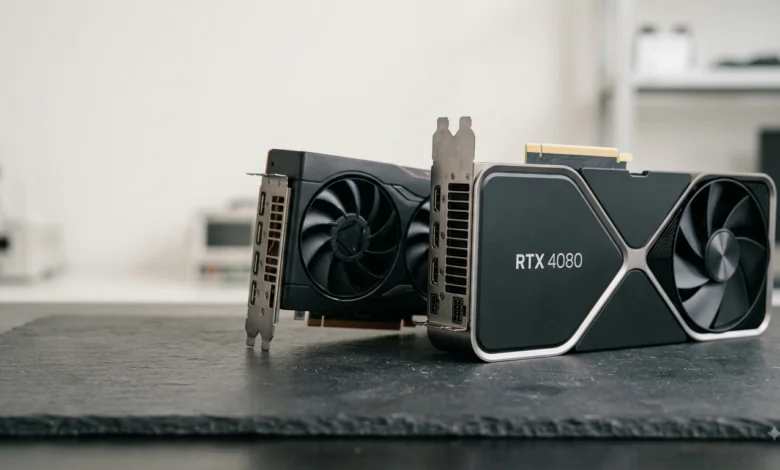
Quick Comparison Table for NVIDIA RTX 6090 vs AMD RX 9900 XT
| Specification | NVIDIA GeForce RTX 6090 | AMD Radeon RX 9900 XT | Closest Confirmed Flagship: NVIDIA RTX 5090 | Closest Confirmed Top AMD GPU: Radeon RX 9070 XT |
| Official Existence | Not officially confirmed | Not officially confirmed | Confirmed (Launched Jan 2025) | Confirmed (Launched Feb 2025) |
| Architecture | Expected Next-Gen (Rumored) | Expected RDNA 4 / RDNA 5 (Rumored) | Blackwell (GB202) | RDNA 4 (Navi 48) |
| VRAM Capacity | Not officially confirmed | Not officially confirmed | 32 GB GDDR7 | 16 GB GDDR6 |
| Memory Bus | Not officially confirmed | Not officially confirmed | 512-bit | 256-bit |
| Memory Bandwidth | Not officially confirmed | Not officially confirmed | 1,792 GB/s | 640 GB/s |
| Compute Resources | Not officially confirmed | Not officially confirmed | 21,760 CUDA Cores | 4,096 Stream Processors (64 CUs) |
| Boost Clock | Not officially confirmed | Not officially confirmed | ~2,400 MHz (Base) / ~2,550+ MHz | Up to 2,970 MHz |
| Board Power (TGP/TBP) | Not officially confirmed | Not officially confirmed | 575W | 304W |
| Recommended PSU | Not officially confirmed | Not officially confirmed | 1000W | 750W–850W |
| MSRP | Not officially confirmed | Not officially confirmed | $1,999 USD | $599 USD (Initial Launch SEP) |
| Release Date | Not officially confirmed | Not officially confirmed | January 30, 2025 | March 6, 2025 |
Introduction
In high-end PC gaming, driving ultra-high resolutions at maximum visual fidelity remains the ultimate test of graphics processing power. Delivering smooth 60+ or 120+ FPS at $3840 \times 2160$ (4K UHD) resolution requires immense pixel throughput, vast memory bandwidth, and specialized compute pipelines capable of processing complex ray-traced lighting, path-traced reflections, and AI-accelerated upscaling in real time.
Gamers regularly debate which top-tier graphics processing units (GPUs) hold the crown for maximum 4K performance. As enthusiasts scan hardware roadmaps and forum discussions, searches surrounding an RTX 6090 vs RX 9900 XT matchup have surfaced.
This comprehensive analysis examines what is known regarding these hardware designations, separates official manufacturer announcements from industry rumors, and provides an evidence-based evaluation of current flagship offerings from NVIDIA and AMD for 4K gaming workloads.
Product Verification: Are These GPUs Official?
Before evaluating architecture, performance metrics, or value propositions, strict journalistic standards require verifying product availability with official manufacturers.
+-----------------------------------------------------------------------------------+
|                            PRODUCT VERIFICATION AUDIT                             |
+-----------------------------------------------------------------------------------+
|  GPU Name                   | Official Status  | Reality / Market Availability     |
+-----------------------------+------------------+----------------------------------+
|  NVIDIA GeForce RTX 6090    | UNCONFIRMED      | Rumored future generation        |
|  AMD Radeon RX 9900 XT      | UNCONFIRMED      | Non-existent model designation   |
+-----------------------------------------------------------------------------------+
NVIDIA GeForce RTX 6090 Status
-
Official Existence: Unconfirmed.
-
Details: NVIDIA has not officially announced, unveiled, or released a GeForce RTX 6090 graphics card.
-
Actual Market Lineup: NVIDIA’s current flagship consumer desktop GPU is the GeForce RTX 5090, built on the Blackwell microarchitecture (GB202 silicon) and officially launched on January 30, 2025. Industry speculation suggests an “RTX 60” series (Rubin/next-gen architecture) will not arrive until late 2026 or 2027 at the earliest.
AMD Radeon RX 9900 XT Status
-
Official Existence: Unconfirmed / Non-Existent.
-
Details: AMD has not announced or released a Radeon RX 9900 XT.
-
Actual Market Lineup: AMD launched its RDNA 4 graphics architecture under the Radeon RX 9000 Series banner (featuring the Radeon RX 9070 XT and RX 9070). AMD explicitly pivoted away from competing in the ultra-enthusiast top-tier halo segment for RDNA 4, opting not to manufacture an “RX 9900 XT” or high-end chiplet flagship. The top RDNA 4 desktop card is the Radeon RX 9070 XT.
Because neither the RTX 6090 nor the RX 9900 XT exist as officially announced hardware, presenting fabricated benchmark numbers or official specifications would be inaccurate. Instead, this article provides a rumor and architectural expectation analysis alongside a detailed comparison of the nearest confirmed top-tier GPUs: the NVIDIA GeForce RTX 5090 and AMD Radeon RX 9070 XT.
Specifications
When evaluating high-end graphics cards, technical specifications dictate theoretical compute throughput, texture fill rates, ray-tracing intersection performance, and memory buffer headroom.
Rumored vs. Confirmed Architectural Frameworks
What Rumors Claim About the RTX 6090
Industry leaks and architectural tracking suggest a future “RTX 6090” would succeed the Blackwell-based RTX 5090. Speculation points to TSMC’s 3nm-class process node, an upgraded execution engine, expanded L2 cache structures, and next-generation GDDR7 memory running at speeds beyond 30 Gbps. However, no concrete specs exist.
What We Know About AMD’s RDNA Strategy
AMD’s official strategy for the RX 9000 series (RDNA 4) focused heavily on mainstream and upper-midrange performance, optimizing power efficiency, ray-tracing hardware, and AI processing rather than building massive monolithic or complex multi-chiplet ultra-enthusiast dies. Consequently, an “RX 9900 XT” was never produced. Rumors regarding a potential “RX 9900 XT” generally stem from community wishlist specs or speculative projections for a potential future RDNA 5 architecture.
Confirmed Flagship Hardware Specifications
To understand the top end of 4K gaming today, we look at the verified hardware specifications of the actual market leaders:
+-----------------------------------------------------------------------------------+
|                        OFFICIAL FLAGSHIP HARDWARE SPECS                           |
+----------------------------------+------------------------+-----------------------+
| Hardware Feature                 | NVIDIA RTX 5090        | AMD Radeon RX 9070 XT |
+----------------------------------+------------------------+-----------------------+
| Architecture                     | Blackwell (GB202)      | RDNA 4 (Navi 48)      |
| Manufacturing Node               | TSMC 4N (Custom)       | TSMC N4P              |
| Compute Units / SMs              | 170 SMs                | 64 CUs                |
| Core Count                       | 21,760 CUDA Cores      | 4,096 Stream Proc.    |
| Ray Tracing Engines              | 170 (4th Gen RT Cores) | 64 (2nd Gen RT/RDNA4) |
| Tensor / AI Accelerators         | 680 Tensor Cores       | 128 AI Accelerators   |
| VRAM Capacity                    | 32 GB                  | 16 GB                 |
| Memory Type                      | GDDR7                  | GDDR6                 |
| Memory Bus Width                 | 512-bit                | 256-bit               |
| Memory Bandwidth                 | 1,792 GB/s             | 640 GB/s              |
| Total Graphics Power (TGP/TBP)   | 575W                   | 304W                  |
| Launch MSRP                      | $1,999 USD             | $599 USD              |
+----------------------------------+------------------------+-----------------------+
4K Gaming Performance
Rendering games at native 4K ($3840 \times 2160$) involves processing over 8.29 million pixels per frame. At this resolution, the performance bottleneck shifts heavily onto the GPU’s rasterization pipelines, pixel fill rate, and memory bandwidth.
Hypothetical Analysis: RTX 6090 vs RX 9900 XT
If an RTX 6090 were released in a future hardware cycle, it would target absolute performance dominance, aiming to run full path-traced titles natively at high frame rates. Conversely, if AMD were to re-enter the ultra-enthusiast tier with a theoretical RX 9900 XT, it would need to deliver significant IPC improvements, higher clock speeds, and a much wider memory bus to match such a target.
Real-World 4K Benchmark Reality (Confirmed Hardware)
In verified independent testing of currently available hardware, the top-tier GPU performance landscape is structured around distinct performance tiers:
1. Ultra-Enthusiast Tier (NVIDIA RTX 5090)
-
Rasterization: Delivers native 4K frame rates well above 100 FPS in demanding AAA games like Cyberpunk 2077, Black Myth: Wukong, and S.T.A.L.K.E.R. 2 at maximum settings without requiring upscaling.
-
Bandwidth Headroom: The 512-bit bus paired with GDDR7 memory (1,792 GB/s) prevents memory bottlenecks at $3840 \times 2160$ resolution or high-resolution texture modding.
2. Upper Mid-Range / High-End 4K Tier (AMD Radeon RX 9070 XT)
-
Rasterization: Designed as a high-value $1440\text{p}$ and entry-to-mid $4\text{K}$ gaming card. In native 4K rasterization, the RX 9070 XT comfortably handles 60+ FPS in most modern AAA titles at High/Ultra presets.
-
Positioning: It competes directly with mid-range offerings like the RTX 5070 Ti and RTX 4070 Ti Super rather than standing as an absolute 4K performance flagship.
                 TYPICAL NATIVE 4K RASTERIZATION RELATIVE PERFORMANCE
  +---------------------------------------------------------------------------------+
  | NVIDIA RTX 5090       [==================================================] 100% |
  | NVIDIA RTX 4090       [===============================>                  ]  62% |
  | AMD Radeon RX 9070 XT [======================>                           ]  45% |
  +---------------------------------------------------------------------------------+
  (Note: Relative performance estimates based on aggregated 4K Ultra rasterized averages.)
Ray Tracing
Ray tracing and full path tracing calculate physical light behavior, including real-time reflections, global illumination, ambient occlusion, and refractions. These operations are computationally intense and place immense load on hardware ray-tracing accelerators.
+-----------------------------------------------------------------------------------+
|                        RAY TRACING HARDWARE COMPARISON                            |
+-----------------------------------+-----------------------------------------------+
| Hardware Characteristic           | Technical Implementation                      |
+-----------------------------------+-----------------------------------------------+
| NVIDIA Ray Tracing Architecture   | Dedicated RT Cores with Bounding Volume       |
|                                   | Hierarchy (BVH) traversal, Opacity Micromap,  |
|                                   | and Displaced Micro-Mesh engines.             |
+-----------------------------------+-----------------------------------------------+
| AMD RDNA 4 Ray Tracing            | Re-architected Ray Accelerators with double   |
|                                   | the RT throughput per CU over RDNA 3, upgraded|
|                                   | BVH processing, and enhanced instruction sets.|
+-----------------------------------+-----------------------------------------------+
Architectural Ray Tracing Differences
-
NVIDIA: NVIDIA’s hardware design dedicates substantial die area to dedicated Ray Tracing Cores and Tensor Cores. In demanding path-tracing environments (e.g., Alan Wake 2, Cyberpunk 2077 Overdrive Mode), NVIDIA cards maintain higher frame rates due to specialized BVH hardware acceleration and AI-driven ray reconstruction.
-
AMD RDNA 4 Improvements: With RDNA 4 (found in the RX 9070 series), AMD made structural gains in ray-tracing performance compared to older RDNA 3 architectures. RT traversal bottlenecks were significantly reduced, narrowing the gap in standard ray-traced titles. However, in extreme path-tracing workloads at 4K, hardware scale remains the deciding factor.
DLSS vs FSR
At 4K resolution, temporal upscaling and frame generation technologies have evolved from optional quality trade-offs into core components of high-refresh gaming ecosystems.
+-----------------------------------------------------------------------------------+
|                     UPSCALING & FRAME GENERATION ECOSYSTEM                        |
+-----------------------------------+-----------------------------------------------+
| Technology Feature                | NVIDIA DLSS Ecosystem                         |
+-----------------------------------+-----------------------------------------------+
| Super Resolution Upscaling        | DLSS 3/4 (AI-Tensor network execution)        |
| Ray Reconstruction                | Dedicated AI-denoising model                  |
| Frame Generation                  | Multi-Frame Generation (DLSS 4 / Optical Flow) |
| Latency Mitigation                | NVIDIA Reflex integration                     |
+-----------------------------------+-----------------------------------------------+
| Technology Feature                | AMD FidelityFX Super Resolution (FSR)         |
+-----------------------------------+-----------------------------------------------+
| Super Resolution Upscaling        | FSR 4 (ML-driven upscaling algorithm)  |
| Frame Generation                  | AMD Fluid Motion Frames (AFMF) / FSR FG       |
| Latency Mitigation                | AMD Radeon Anti-Lag / Anti-Lag+               |
+-----------------------------------+-----------------------------------------------+
NVIDIA DLSS (Deep Learning Super Sampling)
-
Mechanism: DLSS leverages hardware-based Tensor Cores to run deep learning neural networks.
-
Image Quality at 4K: DLSS Quality mode rendering from an internal resolution of $2560 \times 1440$ up to $3840 \times 2160$ often matches or exceeds native rendering by resolving fine line details, motion stability, and distant geometry while eliminating temporal aliasing.
-
DLSS 4 Multi-Frame Generation: Introduced alongside the RTX 50 series, DLSS 4 uses AI to generate additional intermediate frames, multiplying output frame rates in heavily CPU-bound or graphics-intensive scenarios.
AMD FSR (FidelityFX Super Resolution)
-
Mechanism: FSR 4 represents a major leap for AMD, transitioning from purely spatial/algorithmic upscaling filters toward machine-learning-assisted models running on RDNA 4’s upgraded AI Accelerators.
-
Image Quality at 4K: FSR 4 substantially reduces ghosting, temporal shimmer, and disocclusion artifacts seen in older FSR 2/3 implementations, bringing cross-platform upscaling image quality much closer to DLSS in supported titles.
-
AMD Fluid Motion Frames (AFMF): AMD provides driver-level frame generation across thousands of DirectX 11/12 titles, offering flexible frame rate smoothing, though game-integrated frame generation generally yields superior UI rendering and lower input latency.
VRAM and Future-Proofing
VRAM (Video Random-Access Memory) capacity and memory bus bandwidth are critical factors for 4K gaming stability. Running modern AAA titles at $3840 \times 2160$ with ultra-high-resolution texture packs, ray tracing, and frame generation requires significant video memory headroom.
+-----------------------------------------------------------------------------------+
|                        4K VRAM CONSUMPTION BREAKDOWN                              |
+-------------------------------------+---------------------------------------------+
| Gaming Scenario                     | Typical VRAM Demand at 4K UHD               |
+-------------------------------------+---------------------------------------------+
| Standard 4K AAA Gaming (High/Ultra) | 10 GB – 14 GB                               |
| 4K + Heavy Ray Tracing / Path Tracing| 14 GB – 18 GB                               |
| 4K + High-Res Texture Mods / VR     | 18 GB – 24+ GB                              |
+-------------------------------------+---------------------------------------------+
16 GB VRAM (e.g., RX 9070 XT)
-
Capabilities: A 16 GB frame buffer handles virtually all current unmodded AAA releases at 4K Ultra settings without running out of allocation space.
-
Limitations: Extreme path-tracing workloads combined with high-resolution frame generation buffers or heavy texture mods can approach the 16 GB threshold, requiring minor allocation management by the driver.
32 GB VRAM (e.g., RTX 5090)
-
Capabilities: 32 GB of high-speed GDDR7 memory provides absolute headroom for 4K and 8K gaming, extensive texture modding, local AI model execution, high-resolution video editing, and heavy 3D rendering workflows. VRAM capacity limitations are virtually non-existent for consumer gaming workloads on a 32 GB buffer.
Price-to-Performance
Evaluating price-to-performance requires analyzing both official Manufacturer’s Suggested Retail Pricing (MSRP / SEP) and real-world market dynamics.
+-----------------------------------------------------------------------------------+
|                      PRICING AND MARKET POSITIONING AUDIT                         |
+-------------------------+-----------------------+---------------------------------+
| GPU Model               | Launch SEP / MSRP     | Market Position                 |
+-------------------------+-----------------------+---------------------------------+
| NVIDIA RTX 5090         | $1,999 USD        | Halo Ultra-Enthusiast           |
| AMD Radeon RX 9070 XT   | $599 USD         | Upper-Midrange High Value       |
+-------------------------+-----------------------+---------------------------------+
Value Analysis
-
High-End Premium (NVIDIA): Flagship GPUs like the RTX 5090 command a substantial price premium. In terms of raw “FPS per dollar,” ultra-enthusiast top-tier cards sit on a steep curve of diminishing returns. Buyers purchase them for maximum absolute performance rather than budget efficiency.
-
Mid-Range / Upper-Tier Efficiency (AMD): AMD’s RDNA 4 strategy prioritizes value efficiency. By pricing the RX 9070 XT competitively at launch, AMD delivers solid native $1440\text{p}$ and $4\text{K}$ performance per dollar spent. However, broad hardware market fluctuations and memory supply adjustments can impact real-world retail pricing across all GPU tiers over time.
Power Consumption
High-performance 4K rendering requires substantial electrical power, directly influencing power supply unit (PSU) requirements, thermal output, and chassis cooling configurations.
+-----------------------------------------------------------------------------------+
|                        POWER AND THERMAL REQUIREMENTS                             |
+-----------------------------------+-----------------------+-----------------------+
| Metric                            | NVIDIA RTX 5090       | AMD Radeon RX 9070 XT |
+-----------------------------------+-----------------------+-----------------------+
| Total Board Power (TGP / TBP)     | 575 W             | 304 W                 |
| Recommended PSU                   | 1000 W ATX 3.0/3.1    | 750 W – 850 W         |
| Power Connector Standard          | 12V-2x6 / 16-Pin      | Standard 8-Pin PCIe   |
| Primary Thermal Output            | High (~575W heat load)| Moderate (~304W load) |
+-----------------------------------+-----------------------+-----------------------+
Practical Implications for Builders
-
Power Supply Selection: An ultra-flagship like the RTX 5090 demands an ATX 3.0 or ATX 3.1 compliant power supply rated for at least 1000 Watts to safely handle peak transient power spikes. Cards in the 300W class, such as the RX 9070 XT, run comfortably on standard 750W or 850W quality power supplies using standard 8-pin PCIe power cables.
-
Chassis Airflow & Cooling: Dissipating 500W+ of thermal energy requires a high-airflow chassis equipped with multiple intake/exhaust fans or dedicated liquid cooling setups to prevent ambient heat buildup inside the PC case.
Features and Software
Graphics cards serve as holistic hardware and software platforms. Both NVIDIA and AMD maintain feature ecosystems tailored for gamers, streamers, and content creators.
+-----------------------------------------------------------------------------------+
|                         SOFTWARE ECOSYSTEM COMPARISON                             |
+-----------------------------------+-----------------------------------------------+
| Feature Category                  | NVIDIA GeForce Ecosystem                      |
+-----------------------------------+-----------------------------------------------+
| AI & Upscaling                    | DLSS 3 / DLSS 4 (Tensor-backed) |
| Latency Reduction                 | NVIDIA Reflex                                 |
| Video Encoding                    | Dual 8th Gen NVENC (AV1 hardware encode)      |
| Broadcast & Productivity          | NVIDIA Broadcast, Studio Drivers, CUDA, OptiX |
+-----------------------------------+-----------------------------------------------+
| Feature Category                  | AMD Radeon Ecosystem                          |
+-----------------------------------+-----------------------------------------------+
| AI & Upscaling                    | FSR 4 (ML-driven upscaling)           |
| Latency Reduction                 | Radeon Anti-Lag / Anti-Lag+                   |
| Video Encoding                    | Advanced VCN Engine (AV1 hardware encode)     |
| Driver & Software Suite           | AMD Software: Adrenalin Edition, HYPR-RX      |
+-----------------------------------+-----------------------------------------------+
NVIDIA Features
-
CUDA & Professional Workloads: NVIDIA’s CUDA compute ecosystem remains the industry standard for 3D rendering (Blender, V-Ray), machine learning, local LLM execution, and AI video processing.
-
NVENC & Broadcast: The NVENC encoder provides efficient, low-overhead AV1 and H.264 video encoding for live streaming and recording, while the NVIDIA Broadcast suite offers AI noise removal and virtual green screen features.
AMD Features
-
AMD Adrenalin Software: AMD’s unified driver software suite offers a feature-rich, user-friendly interface containing built-in performance tuning, fan curve customization, display profiling, and metrics recording without requiring account registration.
-
HYPR-RX: Combines Anti-Lag, Radeon Boost, and Fluid Motion Frames into a single-click toggle to boost performance across vast game libraries.
Best GPU by Use Case
To help buyers make informed decisions based on confirmed hardware, here is a breakdown of top graphics cards recommended for specific gaming and productivity workloads:
+-----------------------------------------------------------------------------------+
|                        BEST CONFIRMED GPU BY USE CASE                             |
+-----------------------------------+-----------------------------------------------+
| Use Case                          | Recommended Confirmed GPU Option              |
+-----------------------------------+-----------------------------------------------+
| Uncompromised 4K High-FPS Gaming  | NVIDIA GeForce RTX 5090                       |
| Max 4K Path Tracing & Ray Tracing | NVIDIA GeForce RTX 5090                       |
| Best High-Value 1440p / Entry 4K  | AMD Radeon RX 9070 XT                         |
| AI Development, CUDA, & 3D Render | NVIDIA GeForce RTX 5090                       |
| Open-Source Driver & Clean Suite  | AMD Radeon RX 9070 XT                         |
+-----------------------------------+-----------------------------------------------+
-
Uncompromised 4K High-Refresh Gaming: NVIDIA GeForce RTX 5090. Offers highest native rendering pipeline performance and memory bandwidth.
-
Maximum 4K Ray Tracing & Path Tracing: NVIDIA GeForce RTX 5090. Dedicated RT architecture and DLSS Ray Reconstruction lead the industry in full path-traced workloads.
-
Best Value for High-Resolution Gaming: AMD Radeon RX 9070 XT. Delivers solid native rasterization performance, 16 GB VRAM, and upgraded RDNA 4 ray tracing at a competitive price point.
-
Professional Content Creation & Local AI Workloads: NVIDIA GeForce RTX 5090. Equipped with 32 GB of GDDR7 memory and CUDA/Tensor acceleration for demanding professional applications.
Final Verdict
When addressing the question presented in the title—NVIDIA RTX 6090 vs AMD Radeon RX 9900 XT—the official hardware verdict is clear:
+-----------------------------------------------------------------------------------+
|                                 FINAL VERDICT                                     |
+-----------------------------------------------------------------------------------+
| Neither the NVIDIA RTX 6090 nor the AMD Radeon RX 9900 XT are official products   |
| available on the market today.                                                    |
|                                                                                   |
| • For absolute top-tier 4K performance: The NVIDIA GeForce RTX 5090 stands as     |
|   the undisputed reigning performance flagship.                                   |
| • For high-value 1440p and solid 4K gaming: The AMD Radeon RX 9070 XT provides    |
|   an efficient, cost-effective RDNA 4 graphics card.                             |
+-----------------------------------------------------------------------------------+
Gamers seeking the absolute highest performance at 4K resolution should look to confirmed market flagships such as the RTX 5090. Those seeking high performance at a lower price point will find strong value in cards like the RX 9070 XT or RTX 5070 Ti.
FAQ
Which is better for 4K gaming, RTX 6090 or RX 9900 XT?
Neither GPU exists as an officially announced product. At present, the highest-performing consumer desktop graphics card for 4K gaming is the NVIDIA GeForce RTX 5090.
Are the RTX 6090 and RX 9900 XT officially available?
No. Neither NVIDIA nor AMD has officially announced or launched an RTX 6090 or RX 9900 XT. These designations represent internet rumors or speculative names rather than retail products.
Which officially confirmed GPU is the fastest for 4K gaming?
The NVIDIA GeForce RTX 5090 is officially the fastest consumer desktop graphics card available for native 4K gaming, path tracing, and high-refresh workloads.
Which GPU brand has better ray tracing performance at 4K?
NVIDIA currently leads in high-resolution ray tracing and path tracing performance due to dedicated RT core processing hardware and DLSS Ray Reconstruction technology. However, AMD’s RDNA 4 architecture (found in the RX 9070 series) significantly narrowed the performance gap compared to older generations.
How much VRAM do I need for 4K gaming?
For modern 4K gaming at High/Ultra settings, 16 GB of VRAM is recommended as a baseline for new purchases. Flagship cards with 24 GB or 32 GB provide extra headroom for high-resolution texture modding and professional production software.
Is DLSS better than FSR for 4K upscaling?
NVIDIA’s DLSS generally holds an edge in fine-detail preservation, motion stability, and path-traced denoising due to dedicated Tensor hardware. However, AMD’s FSR 4 introduced machine-learning upscaling that brought image quality much closer to DLSS in supported games.
Should I buy a GPU now or wait for future generations?
Waiting indefinitely for unannounced products like an “RTX 6090” is generally not recommended, as official release schedules may be years away. If you need a high-end 4K gaming upgrade today, current-generation confirmed options like the RTX 50-series and RX 9000-series offer strong performance across various price tiers.
Navigating the PC hardware market requires separating official manufacturer releases from speculative leaks. While an RTX 6090 vs RX 9900 XT comparison makes for interesting theoretical discussion, neither product is officially available.
For gamers building a high-end 4K system today, decisions should be based on verified, benchmarks of existing products like the GeForce RTX 5090 and Radeon RX 9070 XT. Evaluate your target resolution, frame rate goals, ray-tracing preferences, and budget to select the GPU that best fits your setup.